Canyonlands’ Island in the Sky District’s must visit sites
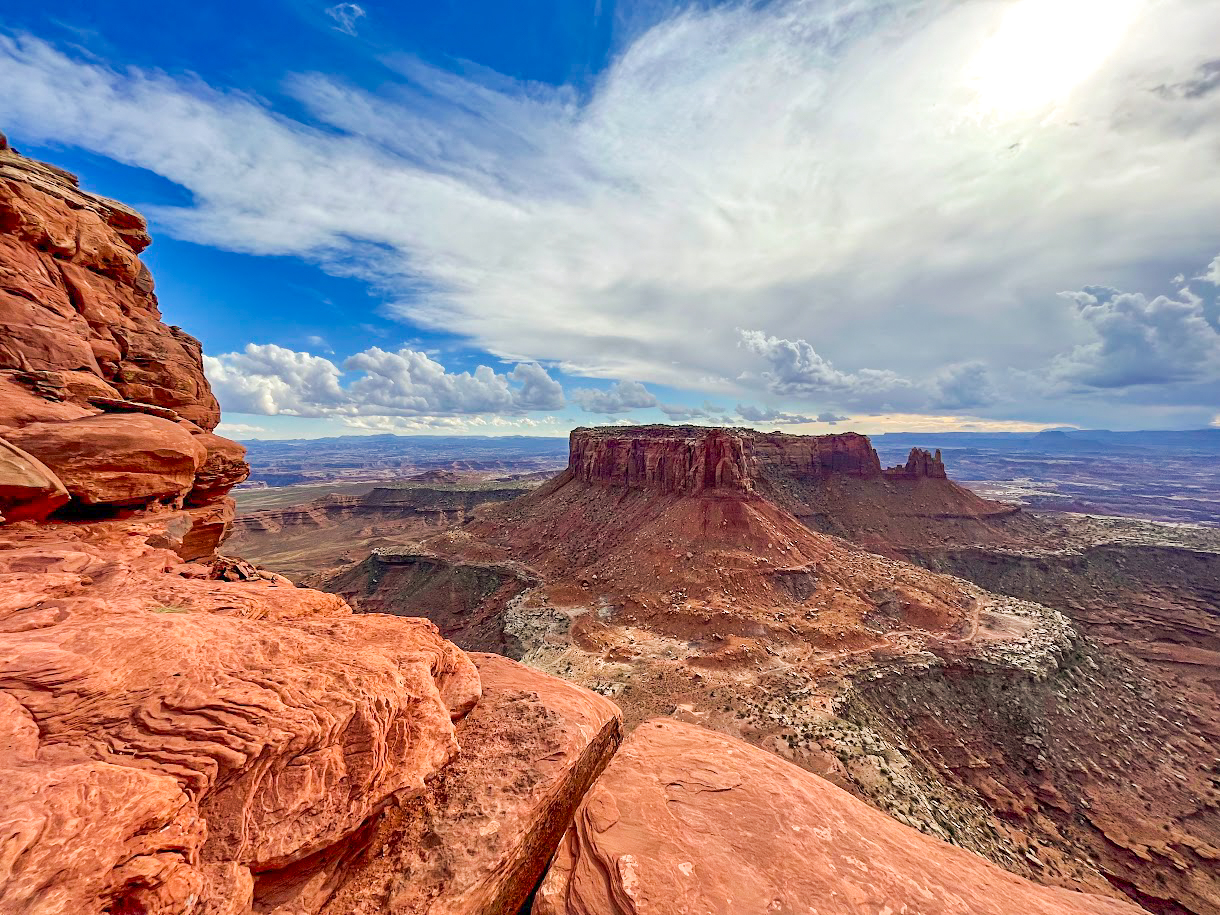
Canyonlands National Park’s scenery and seemingly endless canyons will leave you breathless. The immense expanse of deep canyons and massive rock formations is something everyone should see if they have the chance. The Island in the Sky District is the most visited part of the park. This district features many sites that are worth seeing. These are my recommendations for sites you should see when you are in the Island in the Sky District. These are some park highlights if you only have a day or two to visit this section of Canyonlands.
This post contains affiliate links. If you make a purchase through one of these links, I may receive compensation at no extra cost to you. Thank you for your support.
Visitor Center
Prior to heading into Canyonlands National Park, you should make a stop at the visitor center to learn more about the park’s geology and to purchase souvenirs. I have started collecting refrigerator magnets from the National Parks I have visited and definitely recommend this or collecting another keepsake from each park that you visit. You can also stamp your National Parks’ Passport at the visitor center and ask the rangers any questions you might have about your visit. It is also one of the few locations where the vault toilets have in ground squatty toilets. You might not find that as neat as I do, but sometimes I am easily amused. After the visitor center, head over to Grand Viewpoint Overlook and White Rim Overlook.
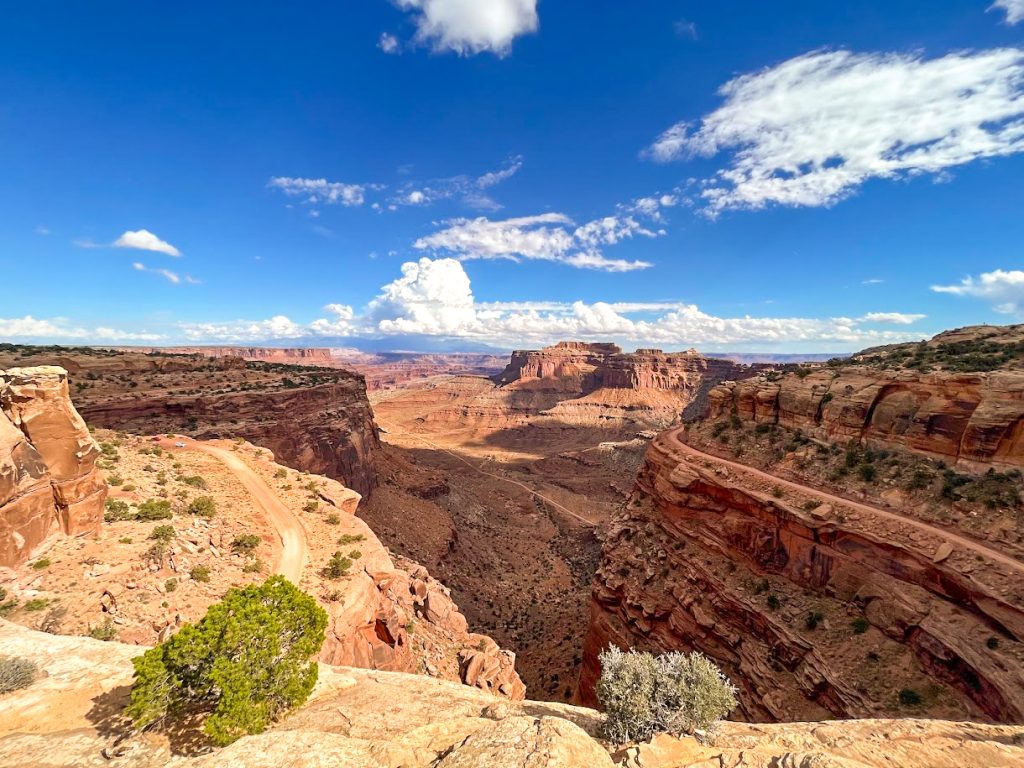 You can begin seeing amazing views of the canyons just a short walk away from the visitor center
Grand Viewpoint Overlook and Trail
While in the Island in the Sky District, you should definitely visit the Grand Viewpoint Overlook and Trail. This overlook is at the southernmost point of the Island in the Sky District. The viewpoint lets you see for miles around you. You can see the La Sal Mountains, the Needles District of Canyonlands, the confluence of the Green River and Colorado River, seemingly endless canyons, and more. The hike to get to the overlook is 1.8 miles roundtrip and the views along the entire trail are breathtaking. The entire hike really showcases the immensity of the canyons that comprise Canyonlands. The trail is rocky and uneven, so it might not be appropriate for those with mobility issues. The trail is also not wheelchair accessible.
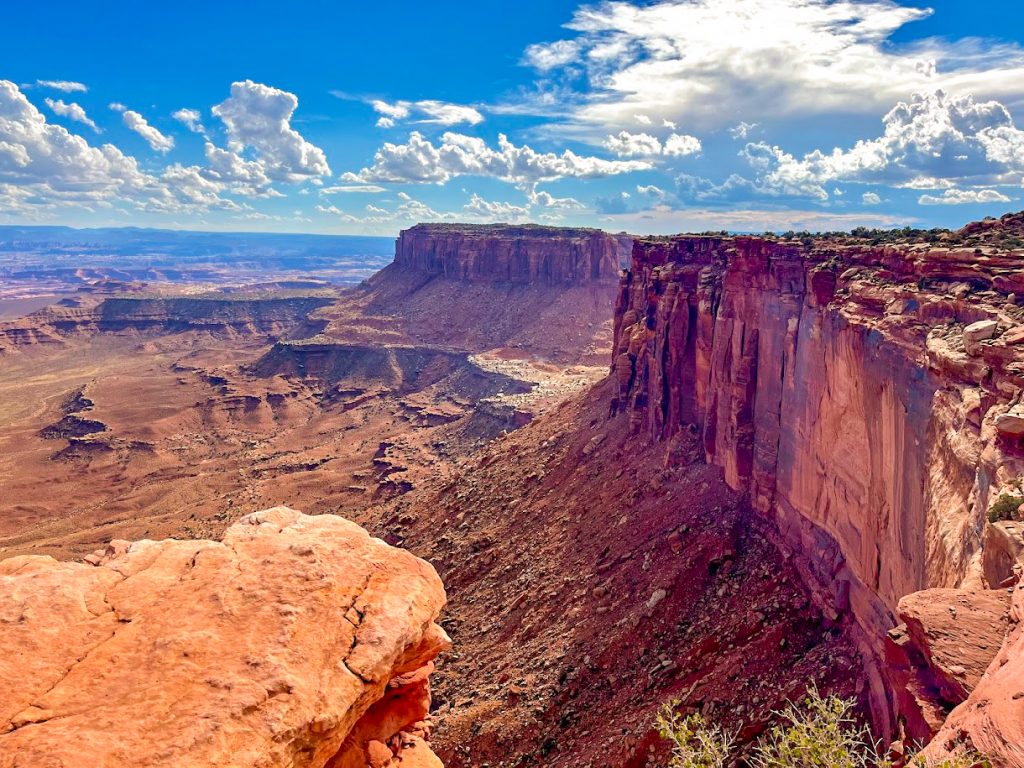 Views of the canyons as you head towards Grand Viewpoint Overlook
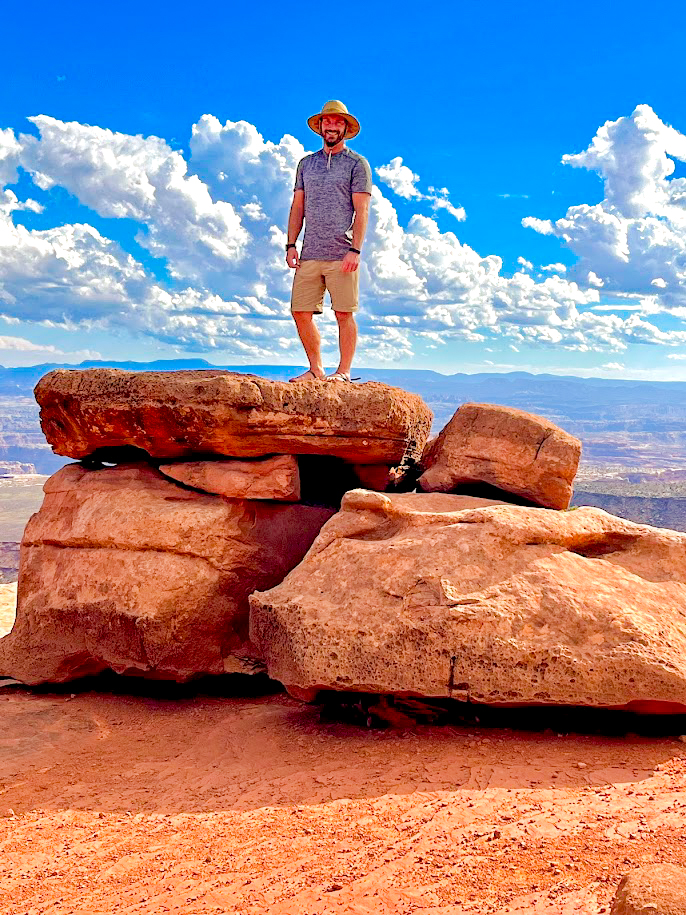 Another photograph along the trail to Grand Viewpoint Overlook
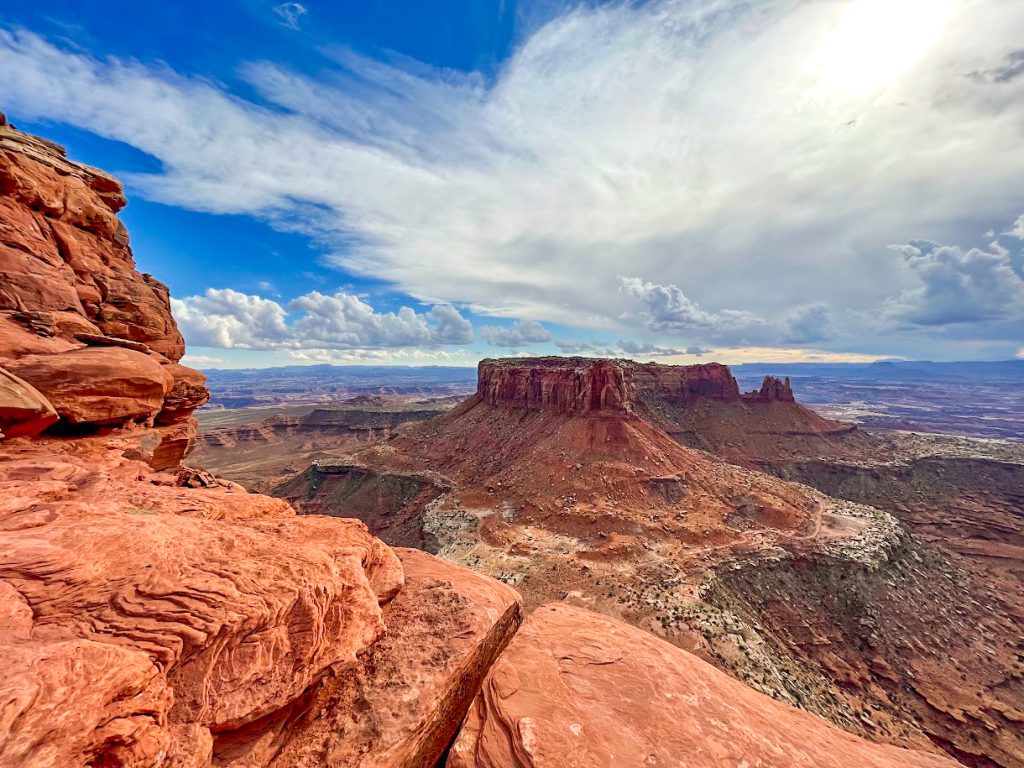 The views from the Grand Viewpoint Overlook are out of this world
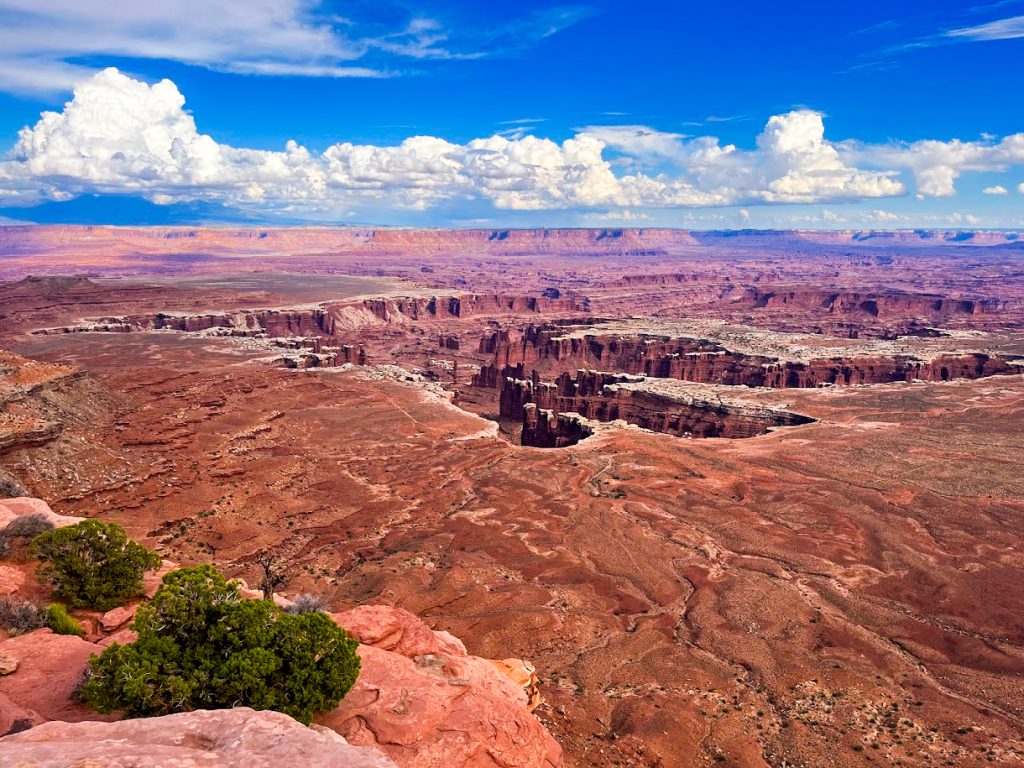 More views of the seemingly never-ending canyons seen from Grand Viewpoint Overlook
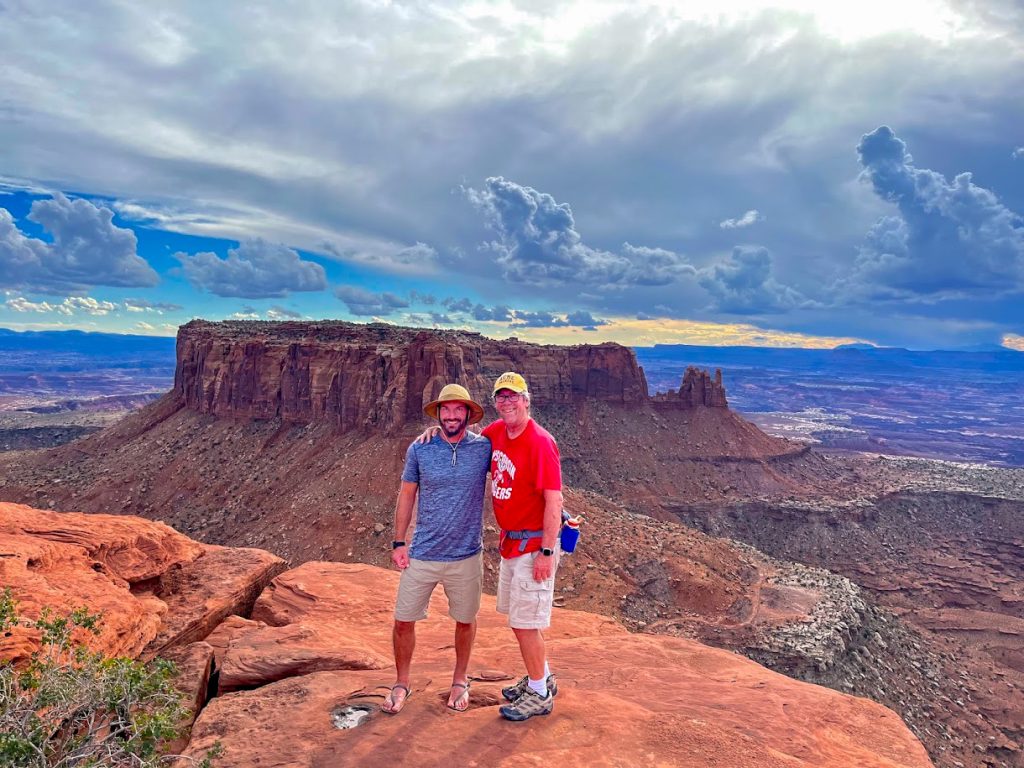 My dad and I at the Grand Viewpoint Overlook
White Rim Overlook
Before or after visiting Grand Viewpoint Overlook, you could also check out White Rim Overlook. There is another 1.8-mile trail here as well. I was unable to hike this overlook as a thunderstorm was rapidly approaching. This trail gives you more of an eastern exposure of the park. You also get a great view of the La Sal Mountains to the east. If you hike to the end of the viewpoint, you are supposed to be able to see the Colorado River corridor to the east as well. This trail is also listed as rocky and uneven and not wheelchair accessible.
Buck Canyon Overlook
Since there was a thunderstorm approaching when I visited, I stopped at Buck Canyon Overlook instead of hiking White Rim Overlook. The walkway to this overlook is paved and wheelchair accessible. You also get stunning views to the east. You can see the La Sal Mountains as well as sprawling canyons. If you want some more beautiful views of the canyons but are tired of hiking, the Buck Canyon Overlook is definitely worth the stop.
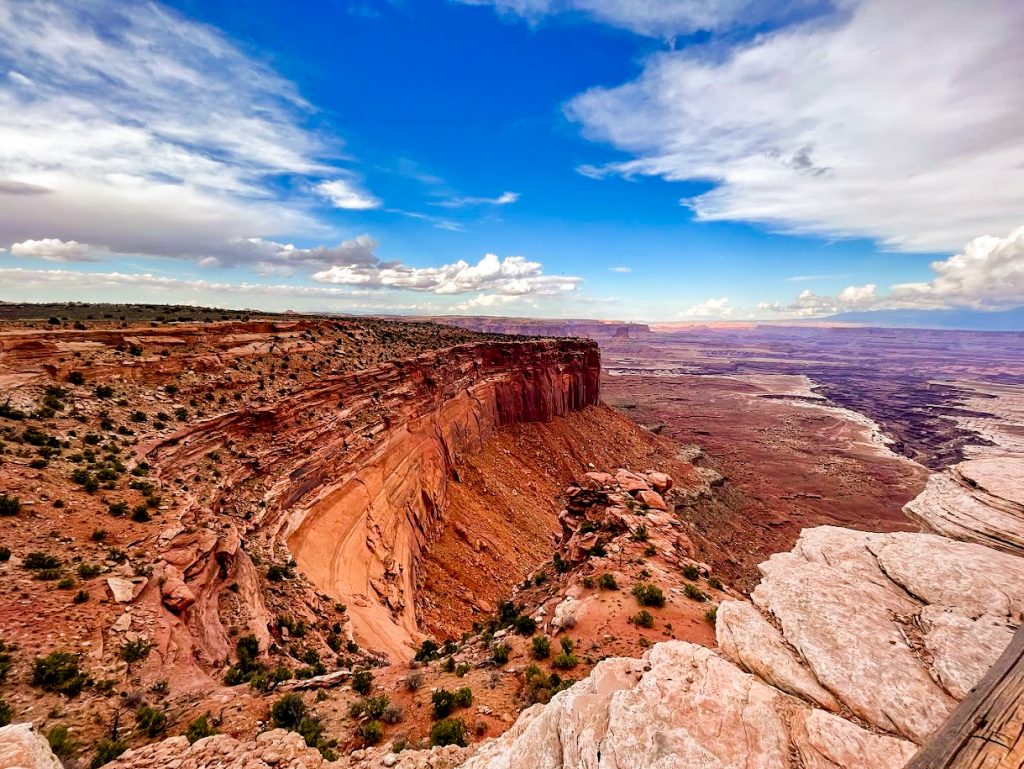 The amazing views from Buck Canyon Overlook are easily accessible along a paved path
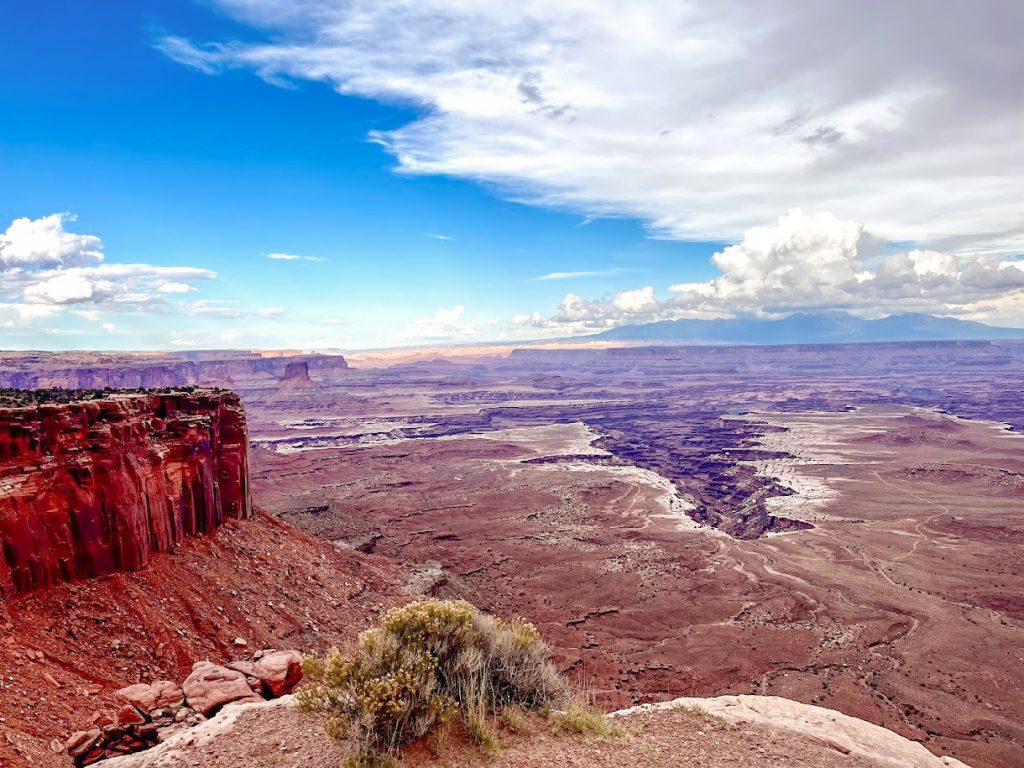 The views of theses canyons never gets old
Upheaval Dome
Upheaval Dome is very interesting because there is still debate about how it was formed. Some scientists believe it was formed by a meteorite impact, and others think it could be a salt dome uplift. Current research leans towards the impact theory, but it is fascinating that this nearly 3-mile across crater is not fully understood. The crater has also been photographed from the International Space Station, which is also pretty neat. You can read more about the Upheaval Dome on the National Park Service website here.
If you hike to Upheaval Dome, I recommend checking out both overlooks. The first overlook is just 0.6 miles roundtrip (although it is mostly uphill) and the second overlook is just 1.2 miles roundtrip. The second overlook takes you across some sections of slickrock where you will need to do some route-finding, but it is not super difficult if you take your time and scan the terrain ahead. Both viewpoints provide unique glimpses into this amazing geological feature and are worth the hike. You can learn more about the overlook trail on the National Park Service website here.
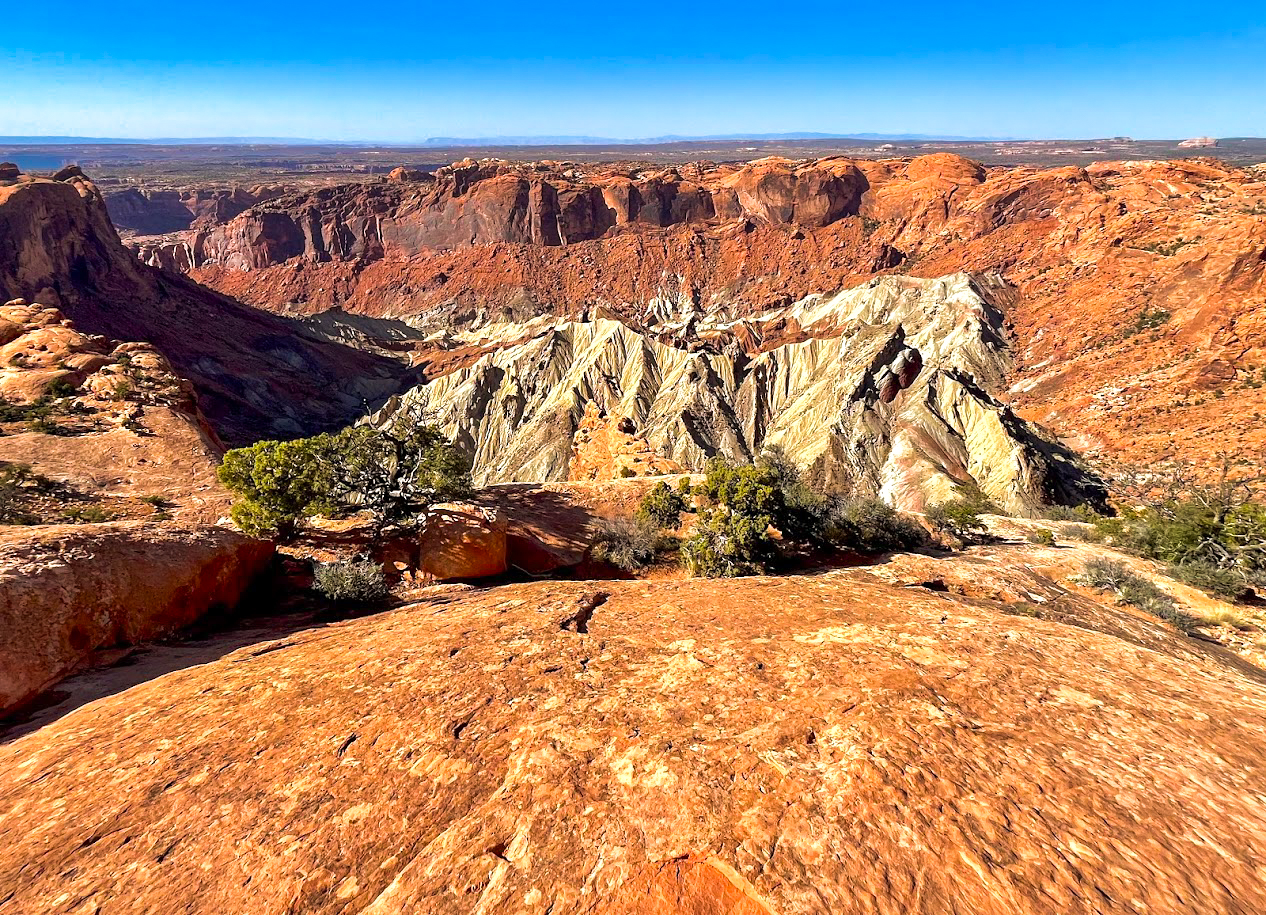 Looking down into the strange landscape of Upheaval Dome
Mesa Arch
Mesa Arch is probably the most photographed site in Canyonlands National Park. It is also probably one of the most photographed sites in all of Utah. That means you can expect large crowds during peak hours for this site. This is generally around sunrise as numerous photographers and content creators attempt to capture the sun illuminating the underside of the arch. When my dad and I visited, we managed to get extremely lucky with Mesa Arch. Just prior to us hiking to the arch, a massive lighting storm rolled through the area and caused a lot of visitors to leave the park. That meant when we got to Mesa Arch, there were only six other people there and they all departed shortly after we arrived.
We managed to have Mesa Arch all to ourselves for quite a while. I was able to take some amazing photos and even snapped some photos of a rainbow through the arch. I feel like that was a once in a lifetime experience that we got lucky enough to stumble into. The moral of the story is that if the arch is too crowded at sunrise, you should hope for a massive lighting storm that clears up quickly and gives you sole access to the most photographed site in the park. Sometimes weather and timing manage to work in your favor to make up for the thousand other times that weather did you dirty.
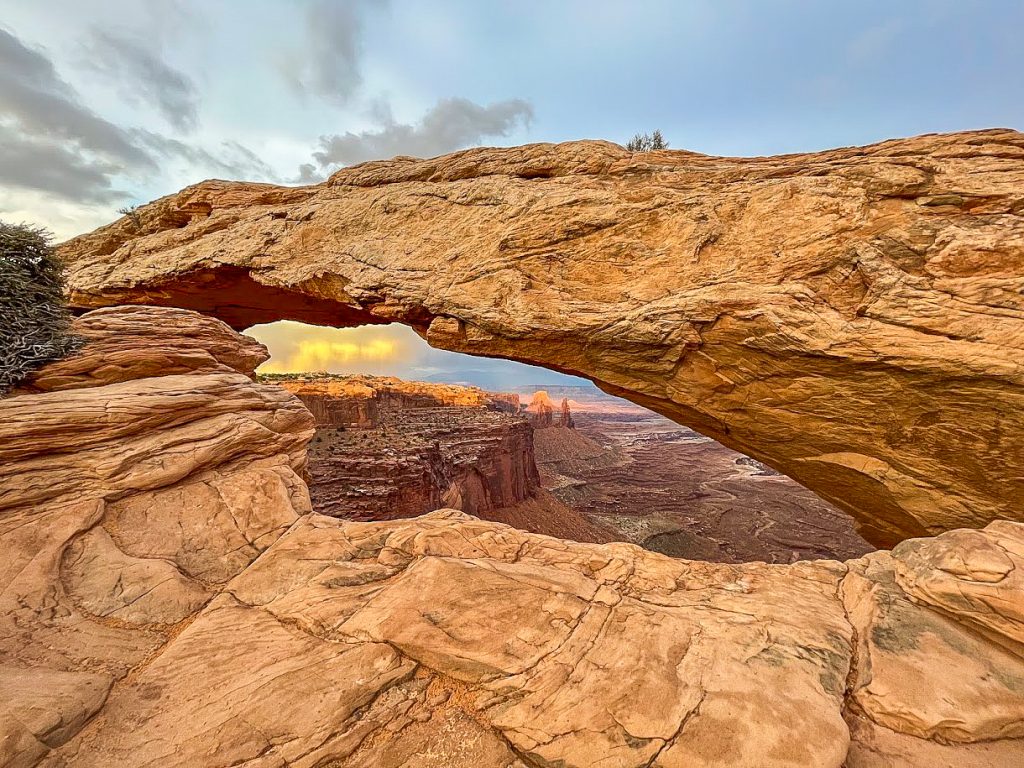 Mesa Arch is stunning and the views you see through the arch are spectacular
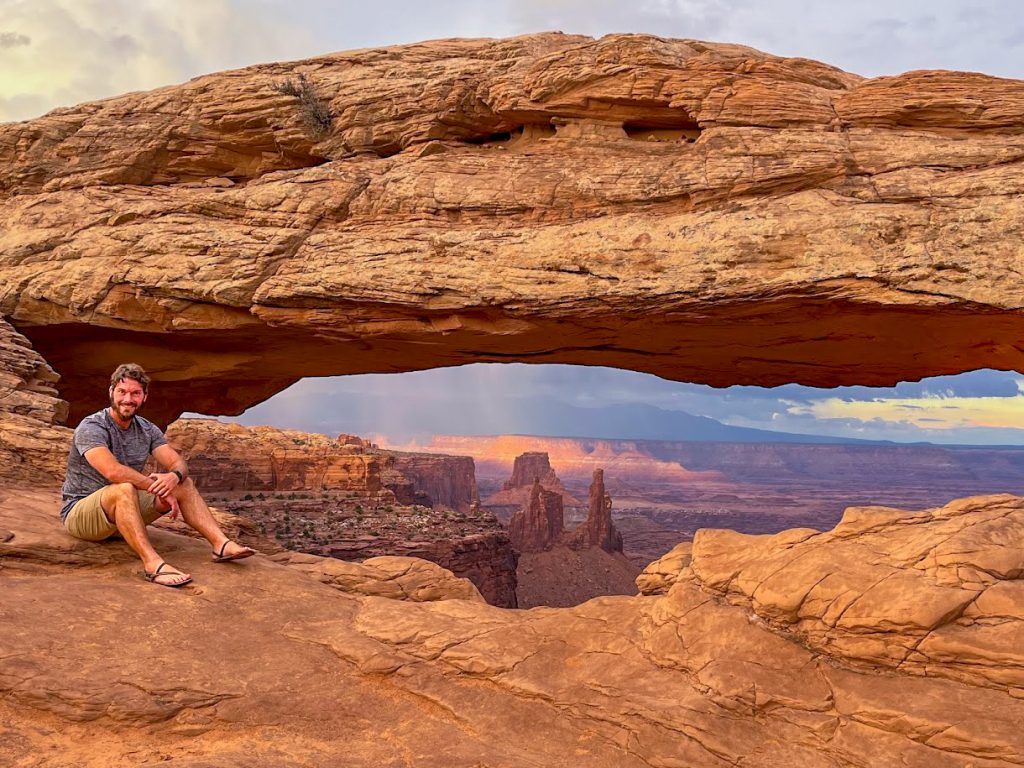 If you arrive just after a lightning storm, you might have the entire arch to yourself
 Catching a rainbow through the arch was a pretty surreal experience
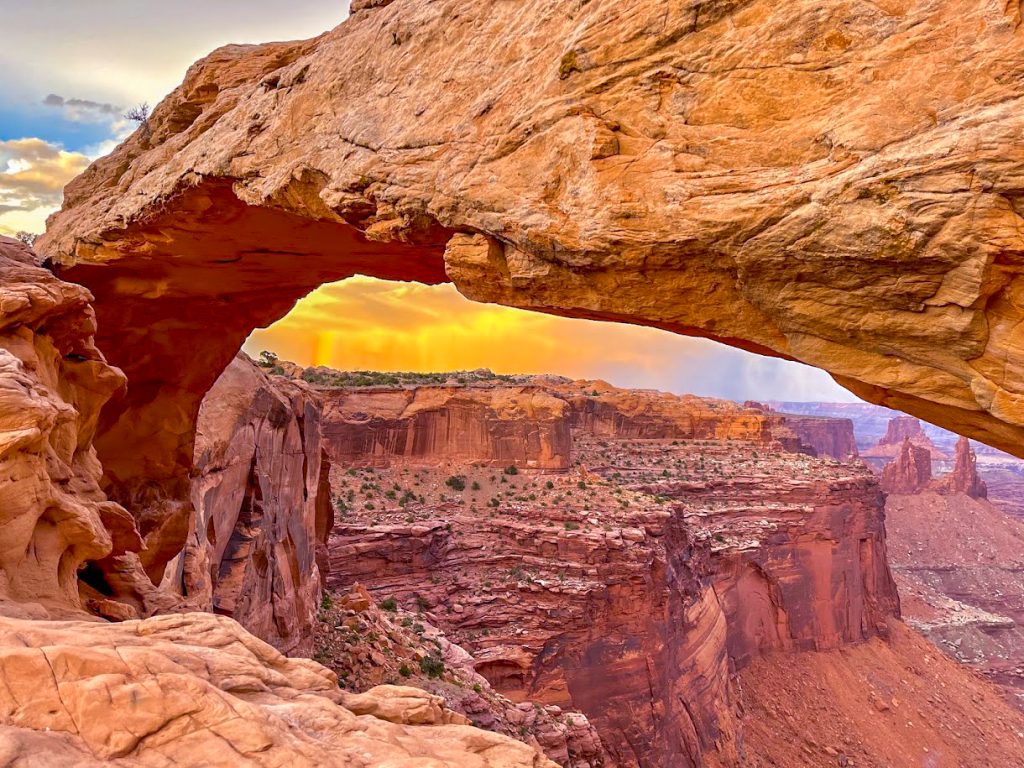 Watching the rainbow and storm cell move away through the arch
If you visit Canyonlands:
If you visit Canyonland’s, it makes the most sense to stay in Moab. I have visited Moab, Utah a few times now. On my most recent visits, I stayed at a nicer hotel as well as a budget friendly hotel. If you are heading to Moab, you can check out my hotel recommendations based on your budget and based on places that I have stayed. You can also search for hotels in Moab below.