15 things you should know before travelling to the Philippines
The Philippines is a magical group of islands with beautiful beaches, the bluest water you can imagine, friendly people, and great excursions. You will surely love this country when you visit! These are some of the things that I discovered about the country that I did not read about prior to going to the Philippines. Hopefully these will help you with your travel planning and help you avoid a few of the things that gave me minor setbacks when I visited this country.
- You will feel like you could run out of cash at any point in the Philippines.
- Maintaining an adequate balance of cash on the islands of the Philippines is a constant challenge. Many of the ATMs you encounter will not be working, so always take out cash at reliable ATMs when you get the chance. Many ATMs distribute a maximum of 10,000 Philippine Pesos (PHP) at any given time and only distribute 1,000 PHP notes. It is then incredibly difficult getting stores and restaurants to make change for the 1,000 PHP notes. You will find that small notes and coins disappear at an incredible rate between taking transportation, paying environmental fees, paying park/beach entry fees, buying bottled water, and paying scooter parking fees, etc.
- Many hotels and hostels also require a cash deposit for your stay so that can also make the cash you are carrying disappear very quickly. My best advice is to visit ATMs and break up larger bills while you are in larger cities or airports. You can also use multiple ATMs at the same place to bypass only being able to withdraw 10,000 PHP at a time, depending on your comfort level with carrying lots of cash.
- Do not plan to use credit cards outside of Manila, Coron, and El Nido.
- In Manila, Coron, and El Nido, many of the hotels, tour companies, and even smaller cafes accept major credit cards. This is absolutely not the case on the smaller or more remote islands where cash is the only form of payment accepted. For this reason, I also recommend trying to book tours, flights, ferries, and hotels ahead of time using websites that allow you to pay in advance. Pay attention to these bookings, however, as sometimes they only take your card information to reserve your place, but they do not actually charge the card, and you still have to pay with cash when you arrive. I very quickly went through several thousand PHP when I realized this was the case with some of the tours I booked online.
- Utilize ATMs at airports and in major cities to be more certain you can get cash and for your safety.
- This was mentioned under the first bullet, but I feel like it also deserves its own bullet point. I cannot stress enough how unreliable the ATMs were on the smaller and more remote islands. I never had issues withdrawing cash from the ATMs at the airports, but it is possible I was just lucky. While researching travel safety in the Philippines too, it seemed like many violent crimes involved ATM related robberies gone bad. This seemed like another good reason to utilize ATMs in well-travelled areas. I never felt unsafe using an ATM, but I could see how going to a poorly lit ATM at night after visiting bars and nightclubs could lead to the potential for trouble.
- Prices for transportation vary widely amongst the islands.
- The prices for taxis, tuk-tuks, and other transportation services very widely between the islands. I was able to take a private taxi from Cebu City to Moalboal, which took 4.5 hours due to traffic, for 2,800 PHP. From El Nido to Puerto Princesa, which also took about 4.5 hours, I took a shared van for around 800 PHP. In Manila, I was asked for 1,800 PHP to take a taxi 10 minutes between airport terminals. I was fortunately able to use the free airport shuttle instead.
- A 45-minute shared taxi from Busuanga Airport to Coron cost 250 PHP and a 45-minute shared taxi from Siargao Airport to General Luna cost 300 PHP, whereas a 15-minute private taxi from Cebu Pier Terminal 1 to a hotel in Lapu-Lapu City by the airport cost 800 PHP. Some of these fees can be negotiated but do know that transportation costs can vary greatly between islands.
- Be ready to practice patience amongst large crowds.
- As with most beautiful destinations, the Philippines also has large crowds at most tourist attractions, beaches, and island-hopping tours. If you do not want to experience large crowds, you will want to consider traveling to islands that are harder to get to and that are not actively promoted by everyone on social media. You can also take private island-hopping and tourist attraction tours that will enable you to leave earlier than most of the tourist trips. These can greatly reduce the crowds that you will experience, but they will also add additional expenses to your trip.
- Pay attention to the school calendar in the Philippines to avoid additional crowds.
- This item closely follows the previous point. Manilla is the most densely populated city in the world, and many of the residents of Manilla and other populated areas in the Philippines take their vacations when the school year ends. In the Philippines, this can be as early as March or April. This will make accommodations harder to come by and will increase crowd sizes as Filipinos are also exploring their gorgeous country once school lets out.
- Be ready for airports and ferry terminals that operate differently than you are used to.
- The airports and ferry terminals can be somewhat confusing to navigate, and the way they operate seems to be fairly inefficient. When you arrive at the airport, it is confusing to figure out where you are supposed to go for departures, and you will need to have your ticket on hand before they let you into the airport. You might also need to change terminals via a shuttle bus if you arrive from an international flight and then take a domestic flight elsewhere.
- For domestic flights, there are strict weight limits for checked and carry-on luggage, so you may need to take items out of your carry-on and put them in your checked luggage to stay within weight limits. Do not be surprised if you are waiting at a gate for your airplane and find that you get on a bus. The bus then drives you out onto the tarmac where you board a plane in the middle of the airfield. Ticketing lines also do not open until exactly two hours before a flight. Be sure to be there then if you need any assistance because the lines can be quite long and the cut-off for checking baggage is quite short.
- Ferrys operate in a similar way. Sometimes you will get to a ferry terminal and not see any signs indicating if you are waiting for the right ferry. You need to listen to the prompts from the PA system to learn when your ferry is boarding. If you travel frequently, these should be minor things to figure out If you travel infrequently, they are things to know beforehand so you can be prepared and can catch your connections.
- Be cautious about what you eat as food poisoning is prevalent.
- This seemed to be extra prevalent in El Nido on some of the island-hopping tours. I met one person who had gone on a tour and 8 of the 20 people on their tour ended up with food poisoning. When I was looking for a health clinic to get a rabies shot in El Nido (I got bit by a cat on my multi-day island hopping tour) many of the reviews of the clinic were by people who had serious food poisoning issues and required intravenous fluids to prevent dehydration. On many tours, the food is prepared in the morning, then put into a cooler and not consumed for several hours. Keep this in mind as you travel so you can reduce your chances of becoming sick and missing out on amazing adventures.
- Consider getting rabies vaccines prior to your trip as they are time-consuming and problematic to acquire while on your trip.
- If you read the previous bullet, you read that I was bitten by a cat on my multi-day island-hopping tour. The cat walked behind me, then bit me on the calf as I was walking away. The boat crew informed me that rabies is quite prevalent in the Philippines and recommended getting rabies shots once we reached El Nido. In order to get my first shot, I went to the local health clinic, which was very inexpensive, but took me 4.5 hours just to get my first rabies shot and the human rabies immunoglobulin shot.
- This meant that I missed out on going to Nacpan Beach like I had intended to do. I had to get my second shot over Easter holiday from the private 24-hour clinic, which cost me 3,500 PHP. I was supposed to get my third shot in the timeframe that I was in Moalboal, but the local clinic did not offer rabies vaccines, and the only clinic in the area that provided them only offered them on specific days of the week. Fortunately, I discovered that there was a Rabies Busters clinic in Cebu City and was able to have my taxi driver take me there to get my last booster before bringing me to the ferry terminal for my trip to Bohol. All-in-all, I ended up losing out on a couple of expeditions I had hoped to do but getting the rabies shots after potential exposure became a priority.
- All-day tours are truly all day. Be ready for long drives in tourist vans and days that begin early and end late.
- When I booked many of my hotels in the Philippines, I was happy to see that breakfast was included or at least offered at many of the hotels. Once I actually got to the Philippines and began taking tours, however, I quickly realized that I would not be able to have many of the hotel breakfasts because the pick-up for tours and dive trips often began before the hotel breakfast started.
- Since many tours involve long van or boat rides and numerous stops, the all-day tours really do take up the majority of the day. You can expect to have pick-ups or meeting times of 7:30am and drop-off or return times after 4:30pm. This is just something to be aware of so that you do not try to cram too many experiences into a day and find out you will not be back from an excursion in time to do another activity you had planned to do.
- Be prepared for a UV index of 12-14 by 9:00am.
- Living in the state of Colorado, we generally get a max UV index of 11 or so, but it generally takes until noon or later to reach these UV levels due to the angle of the sun. In the Philippines, I was surprised to see UV levels of 12-14 by 9:00 am. With such a high UV index, sunburn can occur quickly! It is often best to make sure you apply sunblock early while you are in an air-conditioned environment since the humidity and heat makes it hard to apply once you start sweating. I also recommend downloading the dminder app that shows you the current UV index and estimates how long you can be in the sun before you begin to burn based on your skin tone.
- Clarify all prices with taxis or tuk-tuk drivers before accepting a ride.
- This is a good policy anywhere you travel, but as mentioned above, the prices for transportation can vary widely across the different islands as well as how close you are to an airport or ferry terminal. This is also true of tuk-tuk rides and motorbike taxis on the islands. Be sure to find out prior to your ride how much you are going to be paying so that you do not get surprised with a large charge when the driver drops you off at your destination.
- Book as many flights, ferries, and expeditions as possible in advance. This way you know you have a spot reserved and you can use credit cards.
- Having all of my flights and ferry connections booked prior to my trip made connections relatively easy. I knew I had my seats reserved and was able to use a travel credit card to book those reservations. This also made checking in for flights easier, and I was able to go straight to the check-in lines at the ferry terminals and did not have to deal with the lines of people purchasing tickets at the terminal. I was also able to purchase business class tickets for the ferry, which was only slightly more expensive, but that allowed me to keep my travel backpack and personal item with me instead of having to check them in for stowage at the terminal.
- Book domestic flights as far in advance as possible. The prices increase drastically the closer you get to your trip.
- I watched many Instagram videos of travelers saying how cheap domestic flights were in the Philippines, but I quickly realized that the prices change drastically depending on how early you are able to book them. I had gone back and forth on visiting Malaysa, Indonesia, or the Philippines for quite some time. By the time I chose the Philippines and booked my domestic flights, I was able to see that most of them were listed as “more expensive” than usual.
- I looked at the pricing history on Google and realized that I could have saved a lot of money on flights if I had made my decision sooner and booked my domestic flights earlier. If you have the luxury of knowing you will be going to the Philippines in advance, definitely book your flights as soon as you can. Not all domestic flights were available on Expedia, but I was able to use their flight price reimbursement option to save some money on one of my flights. The price dropped after I had booked my flight, and Expedia reimbursed me for the difference of the change.
- Be prepared for many environmental fees, parking fees, and other access fees.
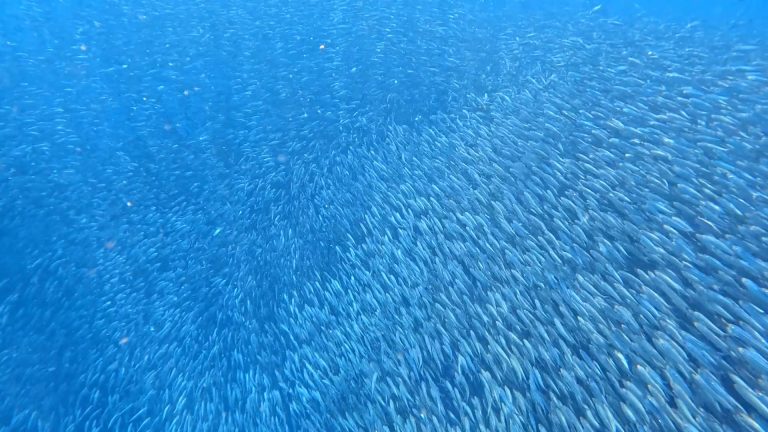
- This follows the theme about how difficult it is to keep small bills in your wallet. I was surprised about how many different small fees I paid while visiting. None of these fees were expensive, but they did make it so much harder to hang onto my smaller bills and coins. In Coron, there was an environmental fee you needed to pay at the airport to access the island, El Nido and Siargao also had environmental fees. In Moalboal, there is a fee to access the beaches that let you snorkel to the sardine run. In Siargao, I had to pay them to enter the island as well as when I returned to the airport.
- In Siargao, I also paid an entrance fee and a motor scooter parking fee at Taktak falls. I also paid an entrance fee, motor scooter entrance fee, and motor scooter parking fee at Alegria Beach and at the Magpopongko Rock Pools. There is also an entrance fee to access the Cloud 9 surfing area. In Siquijor, there were fees for the Old Enchanted Balete Tree, the Pitogo Cliff Nature Park, Salagdoong Beach, and Little Boracay Beach. There are also port fees at all of the ferry terminals that have to be paid before you are allowed to enter the terminal. Again, these fees are not expensive and hopefully help with conservation of these beautiful islands, but it did make it challenging to hold onto smaller denominations of bills and coins.